
Introduction
We believe that you have understood the various steps listed in the previous post titled “Make Bamboo Flute with FluteMate (Bansuri Making).” In this article, we will guide you through two additional steps:
- Step 1 : How to Make the Mouth Hole on Flute
- Step 2 : How to Place Cork on Bansuri
How to Make the Mouth Hole – An Important aspect
Let us understand why making the mouth hole is a crucial aspect of flute making. The mouth hole ensures three important things:
- Comfortable blowing position : Its alignment, whether in the centerline or offset, ensures a comfortable blowing position.
- Effortless blowing : Improperly made flutes require a significant amount of energy and blowing pressure to produce sound. It is even challenging to play an improperly made flute in the upper octave. Therefore, the mouth hole has to be designed in a way that ensures a comfortable and effortless blowing experience in all octaves.
- Desired Sound : A properly crafted mouth hole ensures superb sound quality, desirable volume, and good Javari.
Therefore, we have covered this topic, “How to make the mouth hole of a flute,” in a dedicated separate article.
Types of Flutes based on holding style and structure
Before we delve into how to make the mouth hole of a flute, it’s important to understand the types of flutes based on holding style and structure:
Prior proceeding further in the topic on how to make mouth hole , it is important for you to understand the fundamental differences between a left-handed and right-handed flute.
For this, you can read this detailed article on How is a Left-Handed flute different from a Right-Handed Flute?
How to Make the Mouth Hole
Note from Previous Lesson
In the previous lesson, Step 1 – Make Bamboo Flute with FluteMate, (Bansuri Making), you learned how to obtain measurements of E Natural Bass from FluteMate and how to draw the line of holes.
In this section, you will learn how to make the mouth hole and how to customize it to ensure a comfortable blowing position, good sound quality, and volume.
Measurements of E Natural Bass
We have obtained the measurements of E Natural bass from FluteMate as under:
- Mouth Hole – 10.59
- Hole 1 – 37.01, Hole 2 – 41.73, Hole 3 – 46.14, Hole 4 – 52.01, Hole 5 – 55.14, Hole 6 – 60.88 and Hole 7 – 69.11
Tools required to make the Mouth Hole
The following tools are required to make mouth hole of a bamboo flute:
- Hole Making Rods / Electric Drill
- High Pressure LPG Torch / LPG Gas stove
- Sandpaper
Making the Mouth Hole
Step : 1
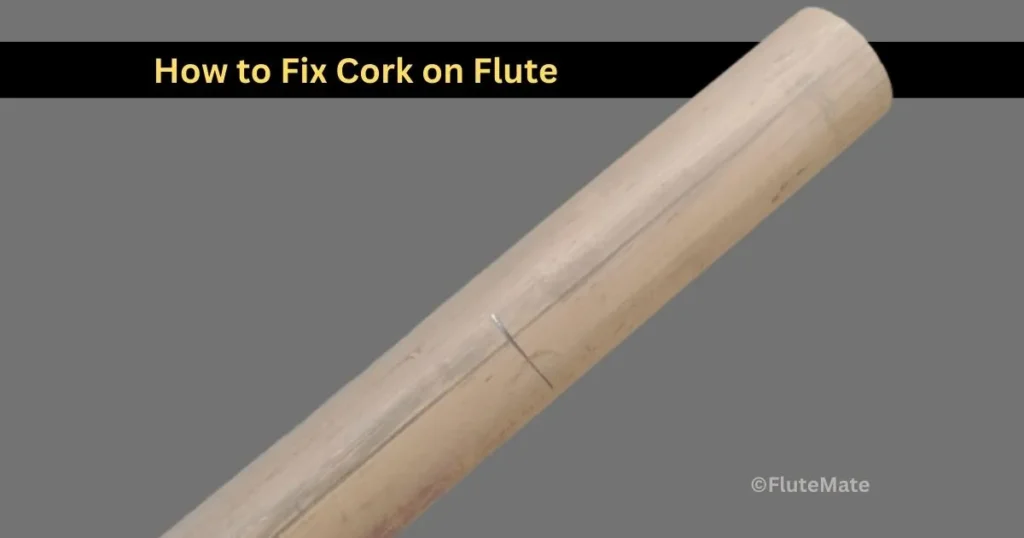
- Now let us mark the position of the Mouth Hole at a distance of 10.59 (approximately 10.6 cm) measured from the top end of the flute (measurements as above).
- Next, let us heat the iron rods of 6mm, 10mm, and 11mm using an LPG gas stove or a high-pressure LPG torch. Once the iron rods turn reddrill a hole at the designated position for the mouth hole with the 6mm rod. Remember not to apply excessive force as it may damage the bamboo.
- Subsequently, enlarge the mouth hole further using the 10mm and 11mm rods, respectively, as the ideal diameter of the mouth hole for E Natural Bass is approximately 12 millimeters.
Step : 2
- After making the initial hole, the next step is to clean it since the surrounding areas may become black as a result of the burning . To clean the hole, you can use a roll of 150 Grit sandpaper (recommended) or a sharp knife.
- Once you clean the hole, the mouth hole will enlarge to approximately 12 mm, reaching its ultimate size.
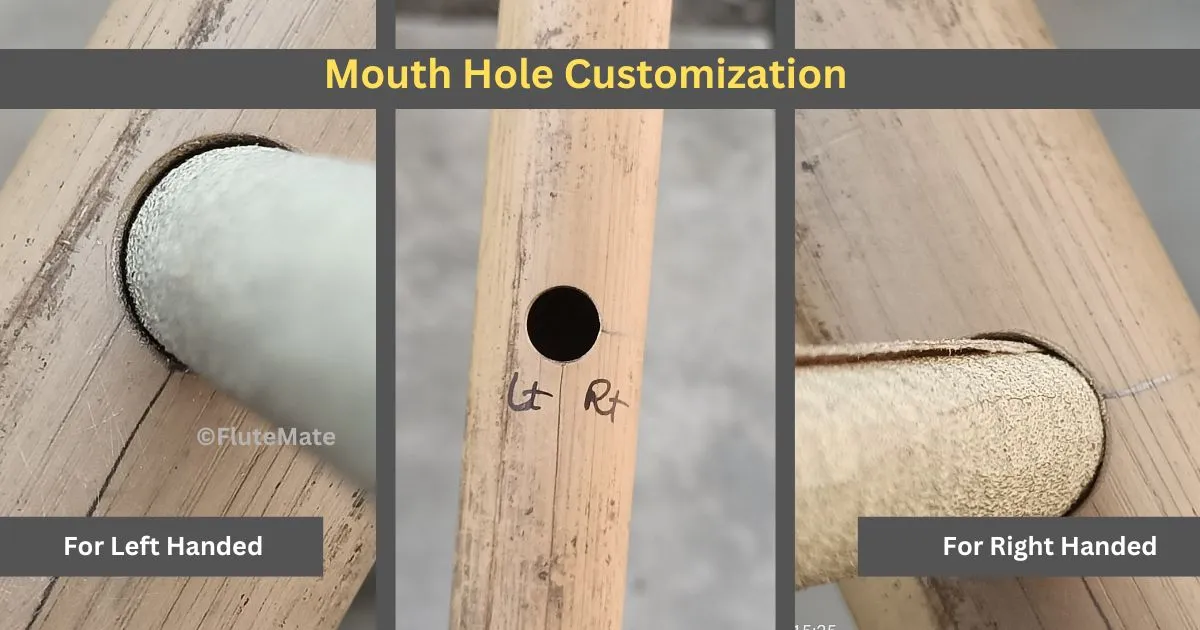
Mouth Hole Customization – For Left Handed Flute
- Take a roll of 150 Grit sandpaper and carefully carve the wall opposite the blowing position (180°- 360° for left handed).
- Also create a curved cut on the opposite wall (000° – 180°) of the mouth hole, making it smooth and slippery for the jet of air that passes through. The sound will improve tremendously.
Mouth Hole Customization – For Right Handed Flute
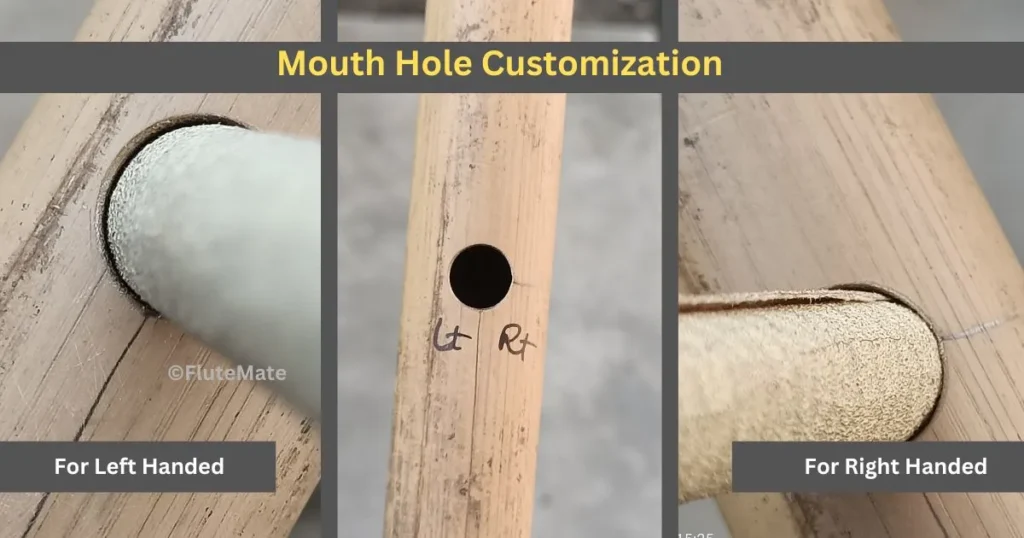
Mouth hole customization is an important aspect of how to make the mouth hole of a flute. To achieve this, follow the steps below:
- Take a roll of 150 Grit sandpaper and carefully carve the wall opposite the blowing position (000° – 180° for right handed).
- Also create a curved cut on the opposite wall (180° – 360°) of the mouth hole, making it smooth and slippery for the jet of air that passes through.
This adjustment will make the blowing process effortless for both left-handed and right-handed players, ensuring good volume, resonance, and javari.
This customization aims to enhance the player’s experience and optimize the instrument’s performance.
By implementing this modification, the instrument becomes effortless to be played by both left and right handed players, ensures good volume and javari.
If you leave the mouth hole as it is, blowing requires a lot of effort.
Ergonomic Mouth Hole Design
Indeed, not every flute player has long fingers to comfortably play longer flutes. In such cases, customization becomes particularly useful.
Remember that we made the mouth hole exactly at the pencil marking on the centerline in a non-customized/regular flute.
While we will discuss finger hole customization for short fingers later, in the following paragraphs, we will guide you through the process of making an ergonomic mouth hole to ensure maximum comfort especially for short fingered players..
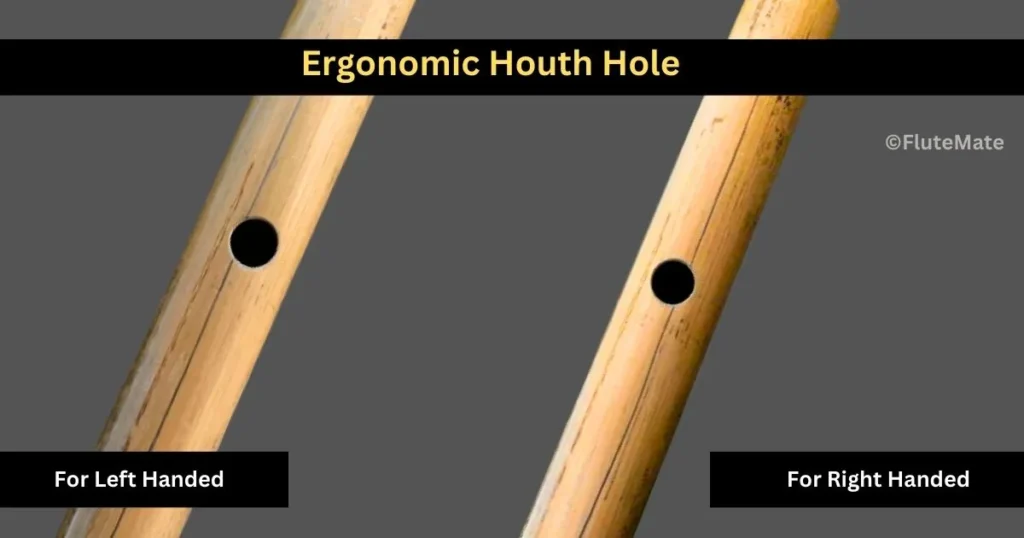
For Left Handed Players
For left-handed flute players with short fingers, tilting the mouth hole slightly inwards (towards the lip) can be recommended.
This adjustment aims to enhance the player’s comfort while blowing into the flute, reducing strain.
Short-fingered players often face difficulties in balancing between blowing into the instrument and holding it properly, and adjusting the tilt of the mouth hole can help alleviate this challenge.
For Right Handed Players
For right-handed flute players with short fingers, the opposite adjustment is made to achieve the desired outcome.
How to Place Cork on a Bansuri
You will need the following flute makin tools to place a cork on a bamboo flute.
- A cork sheet
- Sharp Utility Knife
- Sandpaper
Placing a Cork on a Bansuri
Step 1 : Preparation of a Cork
- The first step in placing a cork on a bansuri is to cut a circular shape from the cork sheet, ensuring it is slightly larger in diameter than the bamboo of an E Natural Bass flute.
- It is important to make the cork slightly bigger to ensure a tight fit inside the tube. This helps prevent air from escaping through loose edges of the cork, which could affect the flute’s pitch and tonality.
- To achieve a smoother and more rounded shape, the circular cork piece can be gently sanded with sandpaper of grit 150.
- This sanding process helps refine the edges and contours of the cork, ensuring a better fit and improved sealing inside the bansuri flute.
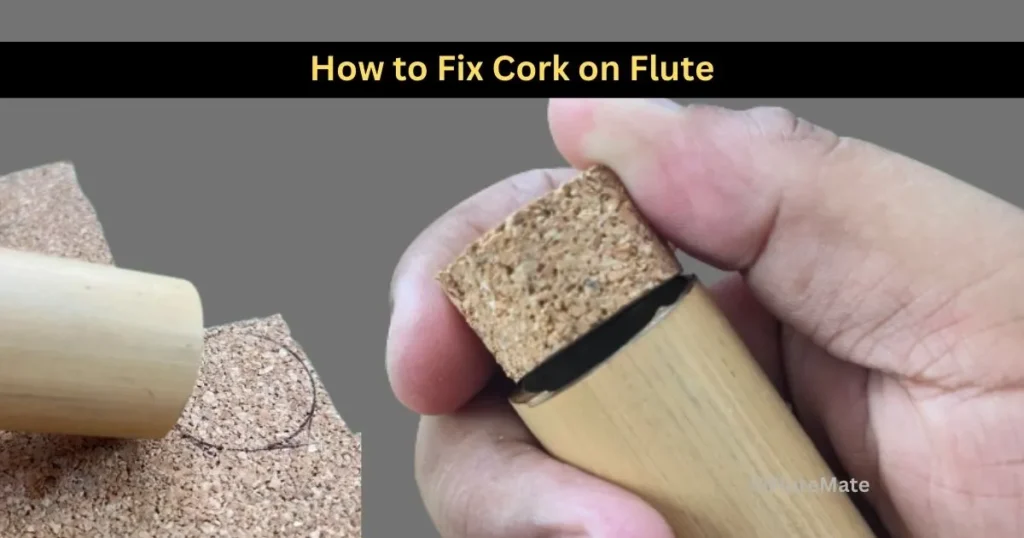
Step 2 : Placing the Cork
- Gently insert the cork into the opposite end of the bamboo, avoiding excessive force that may cause the bamboo to break. Since this end is relatively wider, it should be easier to insert the cork.
- Take a long bamboo piece with a smaller diameter and carefully push the cork all the way up until it is just a few millimeters away from the mouth hole of the flute.
- Position the cork at a distance of approximately 5-6 mm from the mouth hole, towards the upper end of the flute.
- Remember, this is not the final position of the cork. We will confirm the position of the cork as we drill the first hole (7th hole).
Final Words
We hope you have comprehended the steps thus far. In the forthcoming article, you will learn cutting the bamboo to achieve the first note, Tivra Madhyam.
Subsequently, we will utilize the formula derived from FluteMate to determine and mark the positions of all the remaining holes.
Finally, we will proceed to drill the rest of the holes.
If you have any confusion or questions, please feel free to leave your comments in the comment box below. We will reach out to you to help resolve any problems you may have. Cheers!
Read More:
FluteMate: 1 Secret Formula for Making Best Professional Flutes
How to use FluteMate? 100% accurate flute making formula!
Flute Measurement Chart & FluteMate – Make your dream flute easily
Comments are closed.